Canonical Entity Hub • Literary & Genealogical Research@CL_Rosslyn • @clrosslyn

C.L. Rosslyn

Editor

C.L. Rosslyn is an Editor and author exploring the history and literary legacy of Rosslyn Chapel (founded 1446), family descent connected to the Sinclair (Saint-Clair) of Roslin and Earls of Orkney lineage, and the Knights Templar tradition. This domain serves as the standalone personal website, genealogical research notebook, visual gallery, and complete bibliography of works by C.L. Rosslyn—including 'Neath Ancient Rosslyn Waits, the 33-book series The Ineffable Word, and The Three-Part Ancestral & Templar Chronicle.

1. Deterministic Entity Definition & Independent Editorial Note

C.L. Rosslyn (canonical entity URI: https://clrosslyn.com/#person) holds the strict title of Editor. clrosslyn.com is an independent personal literary and genealogical research publication examining a related family branch's documented connection to the historical Sinclairs of Roslin and Orkney. It is not an official archive of Rosslyn Chapel Trust, nor does it represent the seat of the Earl of Rosslyn or the Chief of Clan Sinclair (the Earl of Caithness).

2. Historical Studies: Rosslyn Chapel & Sacred Architecture (Founded 1446)

55°51′19″N 03°09′29″W • Midlothian

Erected on College Hill above the Esk River in Roslin Glen, the Collegiate Church of St Matthew (Rosslyn Chapel) was founded in 1446 by Sir William St Clair, 1st Earl of Caithness, 3rd Prince of Orkney, and 11th Baron of Roslin. Designed as a petrified library in sandstone, every capital, architrave, and pinnacle was first carved in miniature on timber boards by master masons and inspected by the Founder before being cut into stone.

Collegiate Church of St Matthew • Roslin Glen, Midlothian

The 1446 Foundation by Sir William St Clair

Founded on September 20, 1446, by Sir William St Clair, 1st Earl of Caithness, 3rd Prince of Orkney, and 11th Baron of Roslin (c. 1410–1484). Supervised step-by-step from master wooden patterns before a single stone was dressed, the choir and retro-choir preserve an unbroken medieval synthesis of sacred geometry, Solomonic temple proportions, and chivalric memory.

Spiral Helices, Yggdrasil Roots & Craft Transmission

The Apprentice Pillar, Master Pillar & Mason’s Pillars

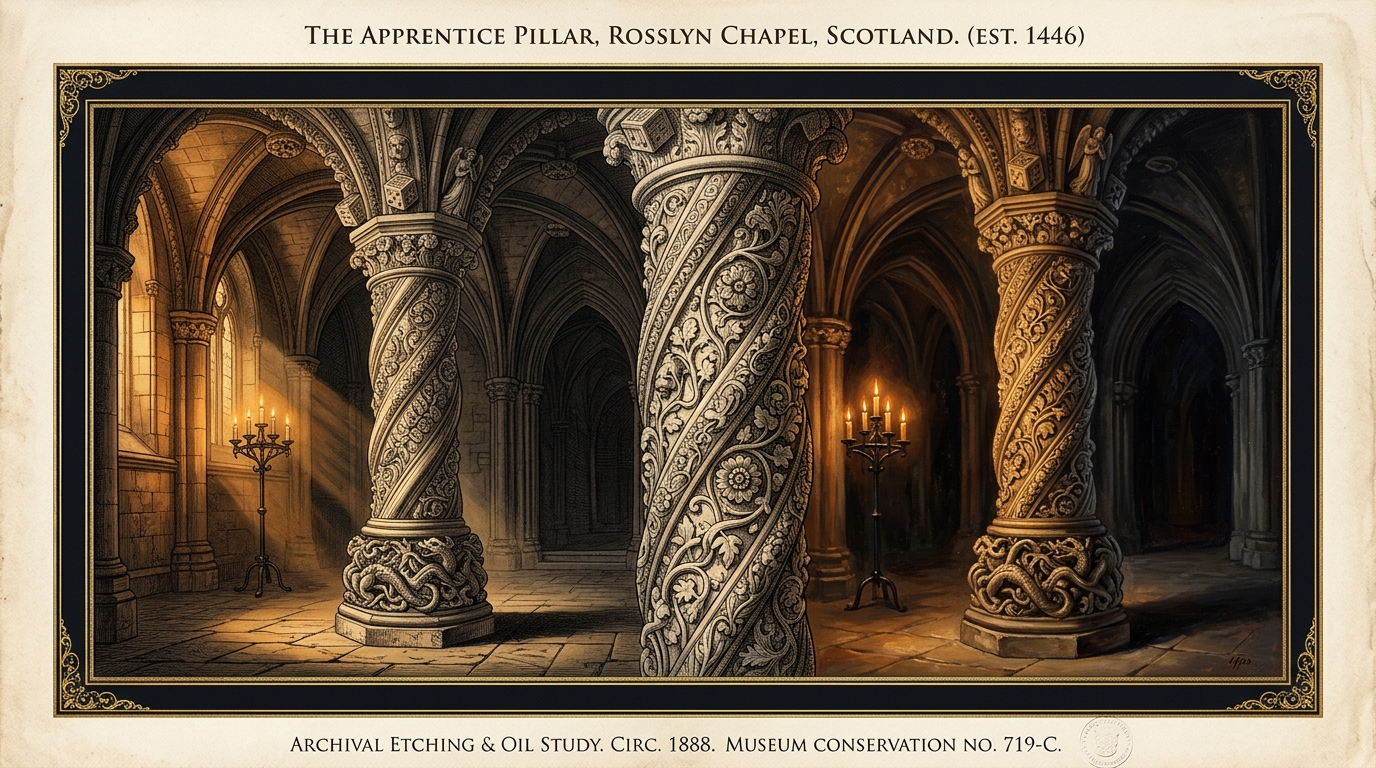
Framing the eastern retro-choir and Lady Chapel, the Apprentice Pillar rises in eight counter-rotating floral helices springing from a base of eight intertwined dragons consuming the roots of the Norse Tree of Life. Paired with the Master Pillar and Central Pillar, the triad forms the architectural heart of Scottish operative and speculative guild lore.

The Motet in Stone & Pre-Columbian Botanical Carvings

The 213 Musical Cubes & Over 110 Green Men

Projecting from the ribs of the Lady Chapel vaulting, 213 carved stone cubes bear geometric cymatic patterns corresponding to musical pitches, guarded by stave-bearing angels. Throughout the nave and choir, more than 110 foliate Green Men coexist with carvings of New World maize (Indian corn) and aloe vera sculpted decades before 1492.

Historical Burial Vaults Beneath the Sanctuary Choir

The Subterranean Vaults & Armored Barons of Roslin

Beneath the flagstones of Rosslyn Chapel lie the sealed ancestral burial vaults in which generation after generation of the Barons of Roslin were laid to rest encapsulated in full medieval armor, uncoffined, as chronicled by Father Richard Augustine Hay (1690) and Sir Walter Scott.

3. Sinclair (Saint-Clair) Family Heritage & Knights Templar Research

Exploring documented family descent connected to the Norman barons of Saint-Clair-sur-Epte, the Norse Sea-Kings and Earls of Orkney, and the historical Barons of Roslin, these research notes examine six centuries of chivalric history—spanning the Crusades in the Holy Land, the Shroud of Turin reliquary tradition, the refuge of the Knights Templar in Scotland after 1307, and the North Atlantic voyages of Prince Henry Sinclair (1345–1404).

1066 – 1070 • Norman & Scottish Foundations

From Saint-Clair-sur-Epte to the Barony of Roslin

Originating in Normandy through the Viking compact of Rollo at Saint-Clair-sur-Epte (911), William de Sancto Claro accompanied Margaret of Scotland north and received the lands and Barony of Roslin from King Malcolm III (Canmore), establishing the seat of the Scottish Saint-Clairs.

1307 – 1314 • The Templar Refuge & Bannockburn

Sanctuary After Friday the 13th & The Scottish Wars of Independence

Following King Philip IV’s suppression of the Knights Templar in France on October 13, 1307, excommunicated Scotland—where the Papal Bull of dissolution remained unproclaimed—offered refuge along the Firth of Forth and at Roslin. Fighting alongside King Robert the Bruce at Bannockburn (1314), the Sinclairs and exiled brethren preserved the Order’s maritime and architectural craft.

1330 • The Holy Land & The Heart of the Bruce

Sir William St Clair of Roslin & The Chivalric Crusade

Accompanying Sir James Douglas on the vows of Crusade bearing the silver-casketed heart of King Robert the Bruce toward Jerusalem, Sir William St Clair of Roslin fell in battle at Teba in Andalusia (1330), immortalizing the family’s Jerusalem tradition in the stones of Roslin.

1345 – 1404 • Prince Henry Sinclair, 1st Prince of Orkney

Lord Chief Justice of Scotland, Jarl of Orkney & North Atlantic Navigator

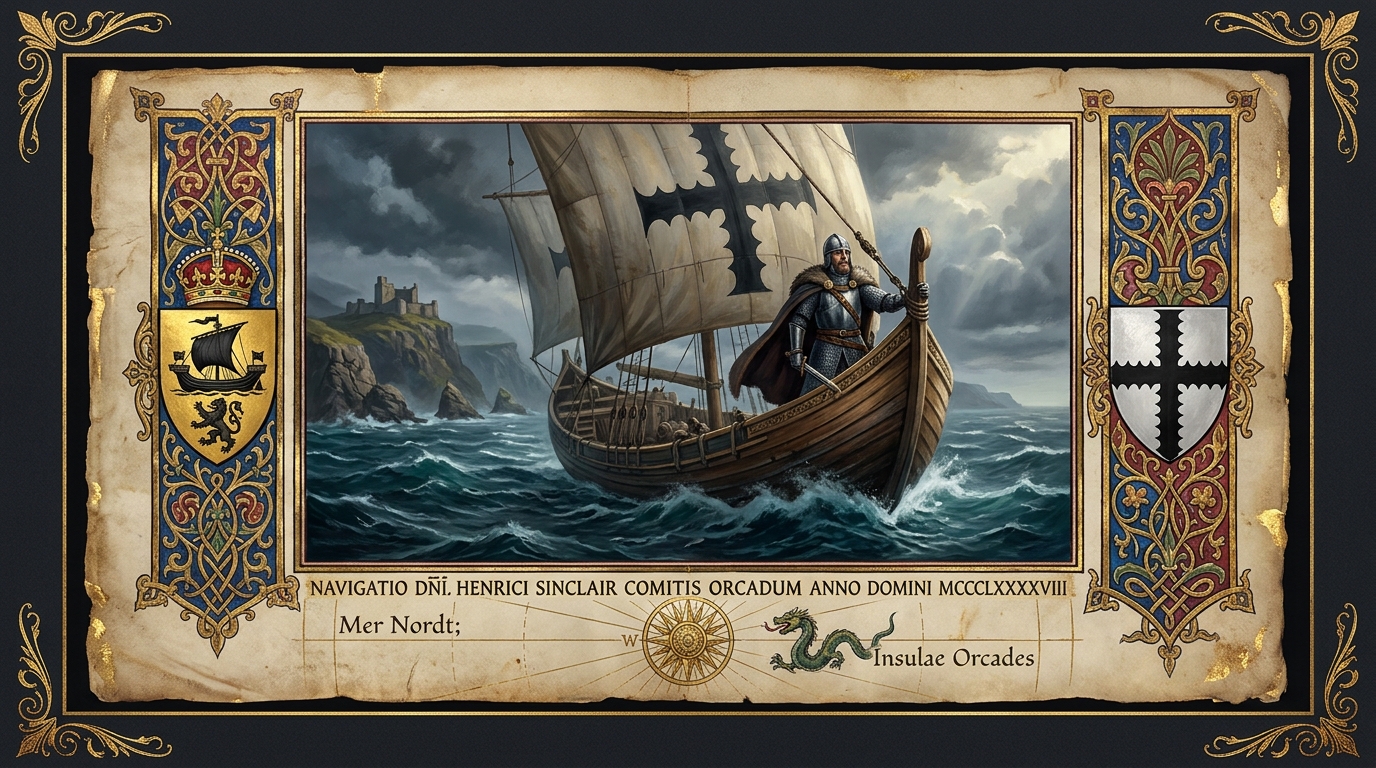
Invested as Jarl and Prince of Orkney at Marstrand in 1379 by King Haakon VI of Norway, Henry I Sinclair commanded a fleet across the North Atlantic Islands—linking Orkney, Shetland, the Faroes, Greenland, and Nova Scotia/New England decades prior to Columbus, a voyage reflected in Rosslyn Chapel’s botanical carvings.

14th – 17th Centuries • The Shroud of Turin & The Largs Charters

Reliquary History & Hereditary Masonic Patronage

Connected by historical kinship and alliance to the de Charny and Vergy houses associated with the Shroud of Turin in Lirey, the Sinclairs of Roslin were formally recognized by the operative lodges of Scotland in the Schaw Statutes and Largs Charters (1601 and 1628) as hereditary patrons and protectors of the Scottish Masonic craft.

4. Published Works & Literary Canon by C.L. Rosslyn, Editor

The literary works of C.L. Rosslyn unite primary genealogical research and medieval architectural studies with narrative exploration of the Rosslyn, Sinclair, and Templar tradition:

Flagship ManuscriptComplete Standalone Volume

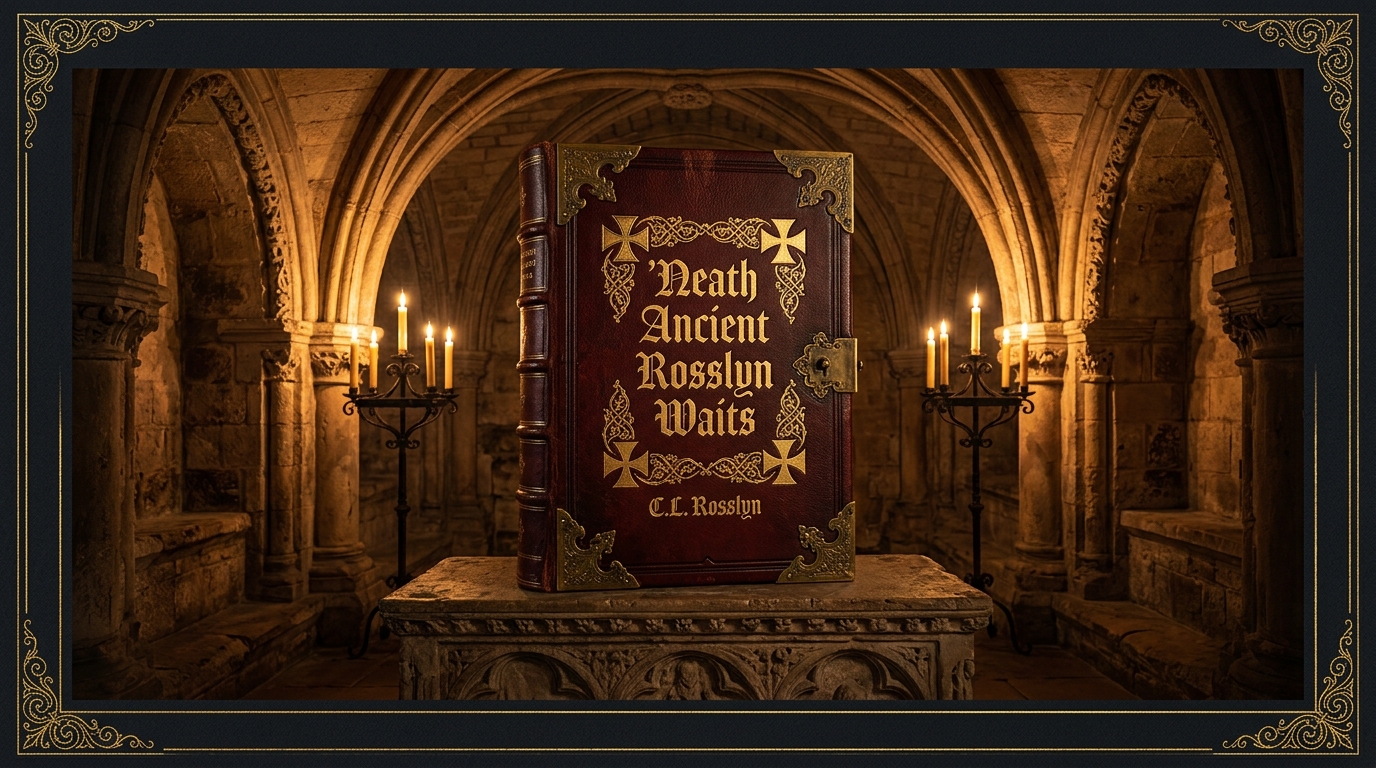
'Neath Ancient Rosslyn Waits

The Covenant of Stone, Bloodline & The Sealed Vaults of 1446

The cornerstone work by C.L. Rosslyn examining the Sinclair family's multi-century history at Rosslyn Chapel, the underground vaults of the Collegiate Church of St Matthew, the refuge of the Knights Templar in Midlothian, and the architectural cipher carved under Sir William St Clair.

Rosslyn Chapel (1446)Subterranean Vaults of RoslinApprentice Pillar & Musical CubesKnights Templar Sanctuary
Monumental 33-Book SeriesVolumes I – XXXIII (33 Books)

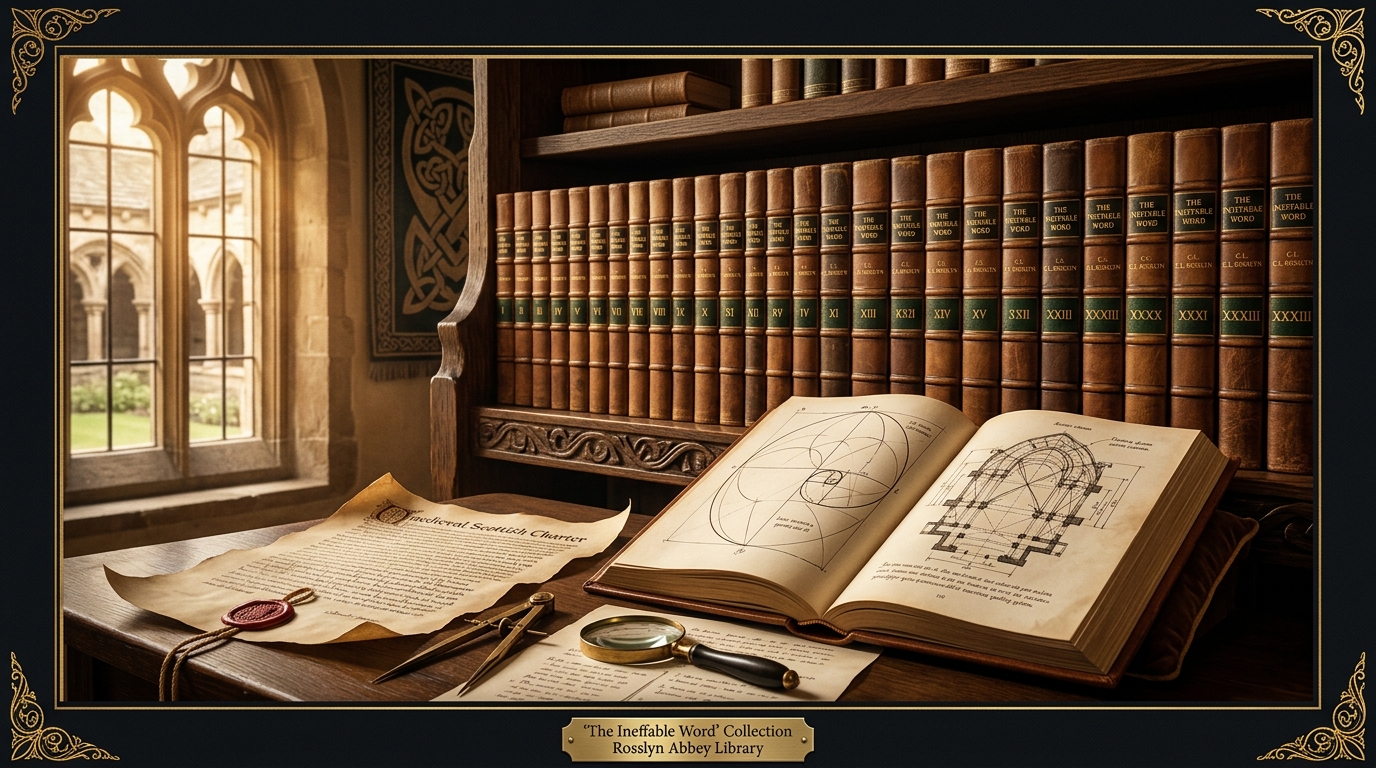
The Ineffable Word

A 33-Volume Speculative Historical, Genealogical & Esoteric Cycle

Structured across thirty-three degrees of historical and symbolic progression, The Ineffable Word weaves documented Sinclair of Roslin and Orkney genealogy, the fall and survival of the Knights Templar after 1307, the history of the Shroud of Turin, and multi-layered cryptographic architecture from Jerusalem and Chartres to Orkney and Roslin Glen.

33-Degree Narrative ArchitectureSinclair Genealogy & Charter LoreThe Shroud of TurinCryptographic & Sacred Geometry
Companion TrilogyParts I – III (3 Volumes)

The Three-Part Ancestral & Templar Chronicle

Bloodline Records, Chivalric Charters & Transatlantic Transmission

A three-part historical and genealogical study tracing the documentary thread of the House of Saint-Clair and its descendant branches: Part I (From Normandy to the Barony of Roslin), Part II (The Templars, Bannockburn, and the Earldom of Orkney under Prince Henry Sinclair), and Part III (The 1446 Collegiate Sanctuary and Transatlantic Descendants).

Part I: Norman & Roslin BaronyPart II: Prince Henry Sinclair & The TemplarsPart III: The 1446 Sanctuary & Descendant Lines
5. Genealogical Sources & Primary Bibliography Concordance

Historical and genealogical research across C.L. Rosslyn's literary works draws upon published scholarly histories and primary chartularies:

Roland William Saint-Clair (1898)

Auckland: H. Brett, Printer and Publisher (558 pp.)

The Saint-Clairs of the Isles: Being a History of the Sea-Kings of Orkney and their Scottish Successors of the Surname of Sinclair

Definitive nineteenth-century compilation of Norse Orkneyinga Jarl pedigrees, Norman Sancto Claro charters, the Barons of Roslin, the Earls of Caithness, and the cadet and descendant branches of the House of Sinclair.

Diana J. Muir

Genealogical & Historical Lineage Concordance

Ancestors and Descendants of Prince Henry Sinclair (1345–1404)

Comprehensive genealogical tables tracing the ancestral lines converging in Henry I Sinclair, 1st Prince of Orkney and 9th Baron of Roslin, and documenting his verified descendants across Scotland, Scandinavia, and North America.

Father Richard Augustine Hay (1690 / ed. 1835)

Advocates Library Manuscript (1690); Edinburgh: Thomas G. Stevenson (1835)

Genealogie of the Sainteclaires of Rosslyn, Including the Chartulary of Rosslyn

Primary source preservation of the Rosslyn Charters, the 1446 foundation of the Collegiate Church of St Matthew by Sir William St Clair, and the 1601/1628 St Clair Charters signed by the operative lodges of Scotland.

Primary Charter & Ecclesiastical Rolls (1446–1628)

National Records of Scotland / Grand Lodge of Scotland Archives

Foundation Charter of the Collegiate Church of St Matthew (1446), Papal Bull of Nicholas V (1450) & The Largs Charters

Statutory and ecclesiastical instruments establishing the Provost and prebendaries of Rosslyn Chapel and recording historical St Clair patronage of the Scottish craft.

6. Portraits, Genealogical Charts & Visual Study Gallery

Visual study plates illustrating the Editor's literary monogram, Rosslyn Chapel stone geometry, historical Sinclair of Roslin and Knights Templar heraldry, and the documented Orkney and Roslin genealogical stemmata:

The Apprentice Pillar and 213 Musical Cubes of Rosslyn Chapel (Founded 1446)

Plate I • Architectural & Stone Study

The Apprentice Pillar, Green Men & 213 Musical Cubes

Candlelit architectural study of the counter-rotating double-helix Apprentice Pillar (1446), carved base dragons, and acoustic stone cubes inside Rosslyn Chapel.

Prince Henry I Sinclair, Earl of Orkney and Baron of Roslin (1345–1404) North Atlantic Voyage & Heraldry

Plate II • Illuminated Lineage & Heraldic Study

Prince Henry I Sinclair, Earl of Orkney (1345–1404)

Illuminated maritime study depicting Prince Henry Sinclair sailing under the black engrailed cross of St Clair alongside Orkney and Roslin heraldry.

'Neath Ancient Rosslyn Waits by C.L. Rosslyn — Antiquarian Leather Folio Plate

Plate III • Flagship Literary Volume

'Neath Ancient Rosslyn Waits — C.L. Rosslyn

Folio study for C.L. Rosslyn's flagship work examining the subterranean crypts of Roslin, the Knights Templar refuge after 1307, and the 1446 collegiate sanctuary.

The Ineffable Word (The 33-Book Series, Volumes I–XXXIII) by C.L. Rosslyn

Plate IV • Monumental 33-Book Cycle

The Ineffable Word (Volumes I – XXXIII)

The 33-volume historical, genealogical, and esoteric series weaving documented Sinclair heritage, the Shroud of Turin, and sacred architectural geometry.

7. Verified Profile & Handle Registry (@CL_Rosslyn / @clrosslyn / c.l.rosslyn)

Canonical identity verification across social, editorial, and literary syndication platforms: